
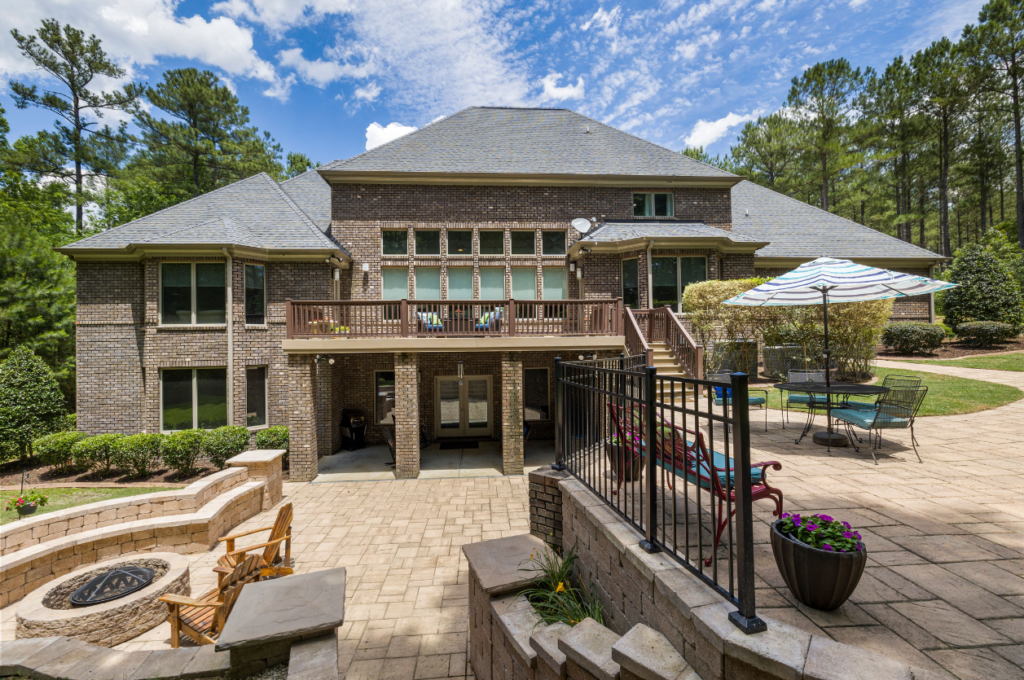
Hey neighbors! You know that sinking feeling, right? You’re standing on your patio—the one you spent thousands on just a few years ago—and you notice the cracks spreading like spider webs across the surface. Or maybe the wood is splintering, or the pavers are sinking into uneven ground. You think to yourself: I thought this was supposed to last.
I get it. We’ve helped hundreds of homeowners navigate this exact frustration, and almost every single one tells us the same thing: “I wish I’d known about this material before we started.”
The good news? You’re about to.
The Top Patio Materials That Actually Survive Time (And Weather)
Natural Stone: The Investment That Feels Like Permanence
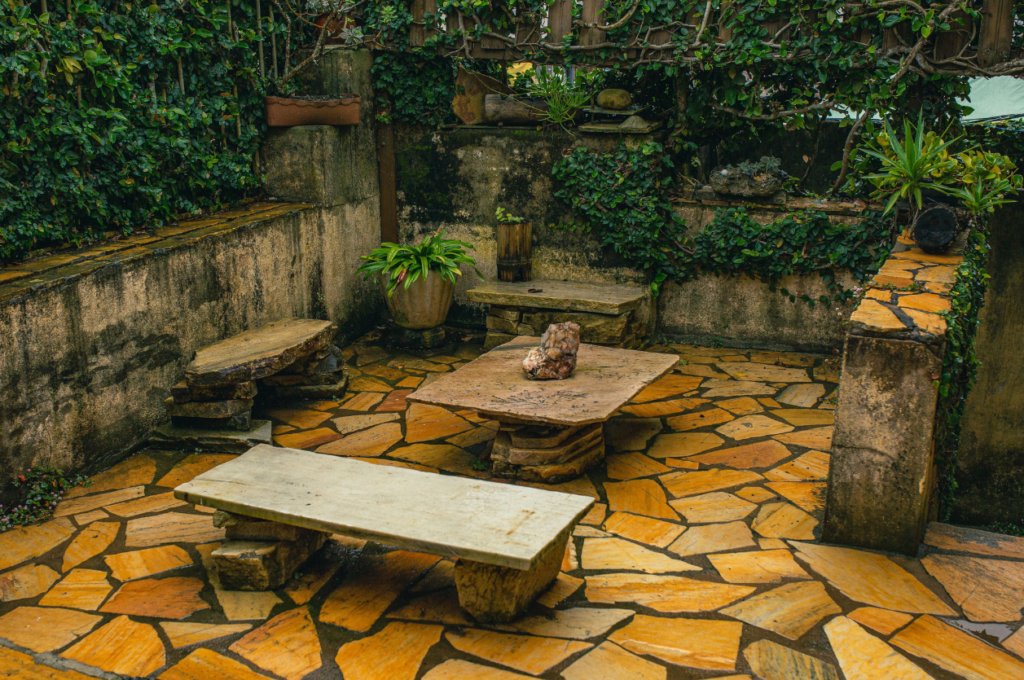
There’s something about natural stone that just feels right. Maybe it’s because flagstone, travertine, and bluestone have literally been used for centuries. They’re not a trend. They’re a proven track record.
Here’s what makes natural stone exceptional:
Durability: A properly installed natural stone patio will last 25-30 years—sometimes longer. We’re talking genuinely multi-generational here.
Weather Resistance: Stone laughs at freeze-thaw cycles. It doesn’t expand and contract the way concrete does. Harsh winters? Stone handles it.
Aesthetic Aging: Unlike other materials that look worse over time, natural stone often looks better. It develops character, patina, and warmth that you literally cannot replicate with new materials.
The honest truth? Natural stone requires quality installation. A cut corner during the base preparation, and you’ll have issues. But when it’s done right, you’re set.
Average professional installation cost: $15-25 per square foot (material and labor combined), so a 400 sq ft patio typically runs $6,000-$10,000.
Composite Pavers: The Low-Maintenance Sweet Spot
Here’s where a lot of homeowners get excited, and for good reason.
Composite pavers—those engineered stone and resin combinations—give you the look of natural stone with roughly 80% less babying required. They don’t stain easily. They won’t shift under pressure. They’re consistent in color and texture, so your patio looks intentional and uniform.
Are they as “forever” as natural stone? Not quite. Most high-quality composite pavers last 15-20 years without issues. But here’s the thing: they’re significantly less expensive to install, and maintenance is genuinely minimal.
Average professional installation cost: $8-15 per square foot, putting a 400 sq ft patio at roughly $3,200-$6,000.
Porcelain Pavers: The Modern Performer
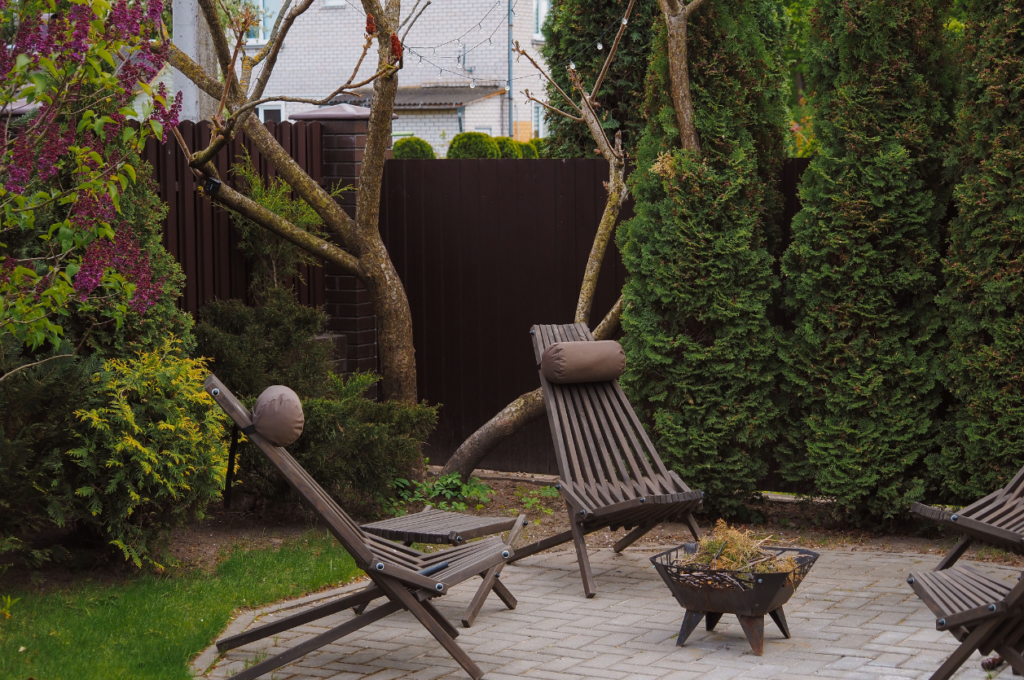
Porcelain has become a serious contender in the last decade, and there’s a reason: it bridges the gap between durability and modern aesthetics.
Porcelain pavers are fired at extremely high temperatures, which makes them incredibly dense and weather-resistant. They won’t absorb water (a major culprit in cracking). They come in unlimited colors and finishes. And they look contemporary without trying too hard.
A well-installed porcelain patio will serve you 20+ years. The main consideration? You need a professional for installation. These aren’t homeowner-friendly DIY materials—the cuts require specialized tools, and the substrate has to be flawless.
Average professional installation cost: $10-18 per square foot, typically $4,000-$7,200 for a 400 sq ft patio.
Concrete: The Practical Choice (When Done Right)
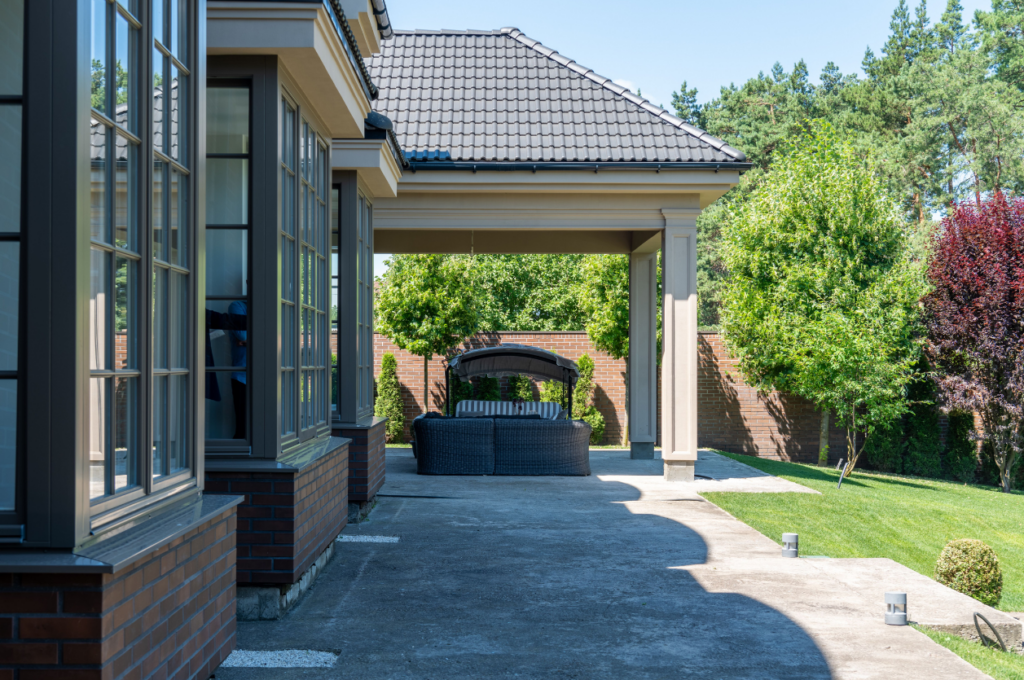
I want to be honest with you about concrete, because most people have seen bad concrete patios, and those bad experiences shape their opinions.
Concrete can be durable. But it requires:
- Proper air entrainment (tiny air bubbles that prevent freeze-thaw damage)
- Adequate thickness (usually 4 inches minimum)
- Professional finishing and sealing
- A quality base underneath
When these things happen, concrete patios last 15-20 years without major issues. When they don’t? You get those spiderweb cracks we mentioned earlier.
The appeal is obvious: cost. Concrete is the most affordable material option.
Average professional installation cost: $4-8 per square foot, so your 400 sq ft patio runs $1,600-$3,200.
If you’re budget-constrained, concrete is legitimate. Just make sure you’re hiring someone who uses air-entrained concrete, seals it properly, and stands behind their work.
Brick and Clay Pavers: The Timeless Classic
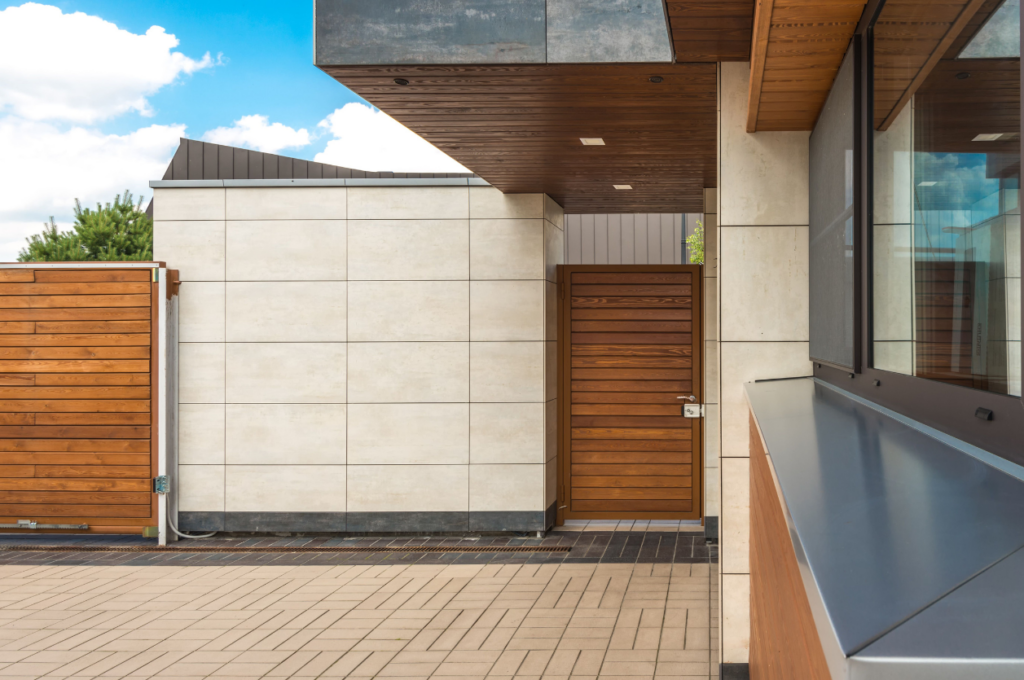
Brick and clay pavers are the grandfathers of outdoor paving. They’ve been used for centuries, and for good reason—they’re authentically durable and they age beautifully.
The real strength here is their ability to withstand freeze-thaw cycles better than most modern alternatives. Unlike concrete, they don’t crack across the entire surface. Individual bricks might need replacement occasionally, but the overall structure holds.
Durability: 20-40+ years, depending on climate and installation quality.
Aesthetic appeal: Brick develops a rich patina that actually improves with age. It’s warm, welcoming, and works with nearly every architectural style.
The trade-off? Brick can require more maintenance than composite or porcelain. Over time, the mortar between bricks may need repointing, and individual bricks can shift if the base settling occurs.
Average professional installation cost: $9-16 per square foot, typically $3,600-$6,400 for a 400 sq ft patio.
Breaking Down the Real Cost: Professional Installation vs. DIY Dreams
Here’s where we need to talk about something uncomfortable: the difference between a patio you install and a patio a professional installs.
I’ve seen homeowners save $2,000 on a DIY installation and spend $6,000 fixing problems two years later. I’ve also seen professionals do work so carefully that the investment paid for itself in longevity and peace of mind.
What professional installation includes:
- Proper site assessment and drainage planning
- Excavation and base preparation (this is 40% of the quality equation)
- Professional-grade materials and tools
- Proper leveling and spacing
- Sealing and finishing (when applicable)
- Warranty and accountability (when applicable)
The Bottom Line: Budget Smart, Not Just Cheap
When you’re getting quotes for your patio project, don’t just compare the per-square-foot numbers. Ask about what’s included. Ask about permitting fees. Ask about site prep costs. Ask about the base material and substrate specifications. Ask about warranties.
The numbers in this guide represent the minimum average for 2026 under standard conditions. Your project will likely cost more—and that’s not a failure of planning, it’s just the reality of custom outdoor construction.
But here’s what we know from years of helping homeowners: the ones who are happiest aren’t the ones who got the cheapest quote. They’re the ones who understood the full scope of work, chose a quality material for their climate, hired a reputable contractor, and invested appropriately.
That investment? It pays dividends. Not in a few years. In decades.