
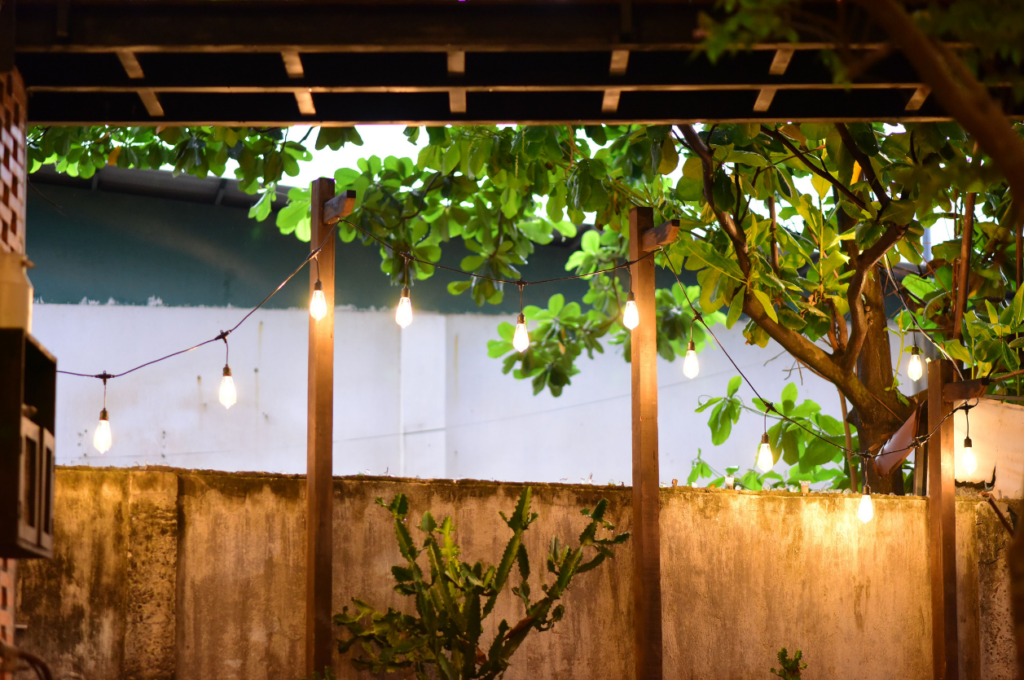
Hey neighbors! If you’re planning an outdoor renovation or upgrade, outdoor lighting is one of the best investments you can make. Not only does it enhance your home’s curb appeal and security, but energy-efficient outdoor lighting can also reduce your electricity bills significantly. Let’s explore your options and help you make an informed decision.
Before diving into specific options, understand why this matters:
- Lower electricity costs: Energy-efficient fixtures can reduce lighting costs by 50-80%
- Environmental impact: Less energy consumption means a smaller carbon footprint
- Longevity: Modern efficient lights last much longer, reducing replacement frequency
- Better light quality: New technology delivers superior illumination compared to older options
The Best Energy-Efficient Outdoor Lighting Options
1. LED (Light Emitting Diode) Lighting
Why it’s the best choice:
- Uses 75% less energy than incandescent bulbs
- Lasts 25,000-50,000+ hours (compared to 1,000 hours for traditional bulbs)
- Available in various colors and brightness levels
- Instantly turns on (no warm-up time)
Best for: Path lights, deck lighting, spotlights, string lights, wall-mounted fixtures
Expected cost: Higher upfront investment, but recouped through energy savings within 1-3 years
Pro tip: Look for fixtures with adjustable color temperature (2700K-5000K) to match your home’s aesthetic.
2. Solar-Powered Lights
Why consider them:
- Zero electricity costs after installation
- No wiring required—easy to install anywhere
- Perfect for remote areas of your yard
- Environmentally friendly
What to expect:
- Variable performance depending on sunlight exposure
- Battery may need replacement after 3-5 years
- Less bright than wired options, but improving rapidly
- Ideal for accent lighting rather than primary illumination
Best for: Pathway lighting, garden accents, deck posts, fence lighting
Expected cost: $20-$150 per fixture depending on quality
Pro tip: Choose high-quality solar lights with lithium batteries for better performance and longevity.
3. Smart Lighting Systems
Why they’re worth considering:
- Control brightness and color from your smartphone
- Schedule lights to turn on/off automatically
- Create scenes for different occasions
- Monitor energy usage in real-time
Popular options:
- Philips Hue outdoor systems
- LIFX smart bulbs
- Smart switches paired with standard fixtures
What to expect:
- Requires WiFi connectivity and a hub
- Initial setup may require professional help
- Excellent for customization and convenience
- Integrates with home automation systems
Best for: Deck lighting, patio fixtures, wall-mounted lights, landscape lighting
Expected cost: $40-$300+ per fixture depending on features
4. Halogen and CFL (Compact Fluorescent Light) Bulbs
The reality:
- Better than incandescent, but inferior to LED
- CFLs contain small amounts of mercury (disposal matters)
- Halogen produces heat—not ideal for all applications
- Recommendation: Skip these in favor of LED technology
Energy-Efficient Outdoor Lighting by Application
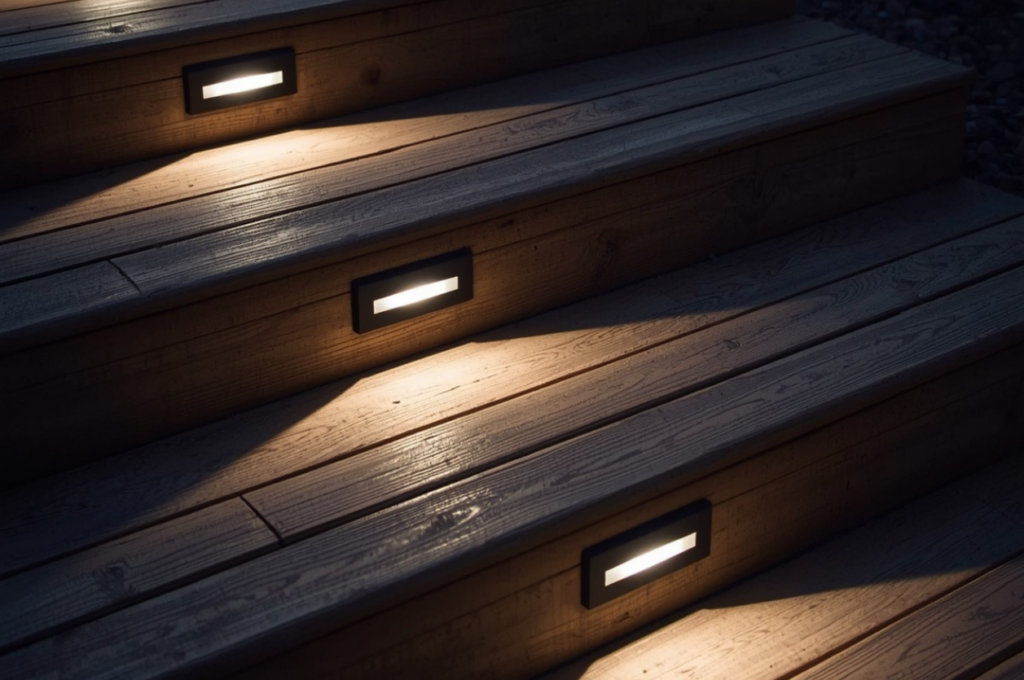
Pathway & Accent Lighting
- Best option: Solar LED lights or wired LED fixtures
- Why: Low power requirements, aesthetic appeal
- Expected brightness: 100-300 lumens per fixture
Security Lighting
- Best option: Wired LED fixtures with motion sensors
- Why: Reliable, bright, and energy-efficient
- Expected brightness: 400-1000+ lumens
Deck & Patio Lighting
- Best option: Smart LED fixtures or high-quality solar options
- Why: Flexibility for entertaining, good brightness
- Expected brightness: 300-800 lumens per fixture
Landscape Spotlighting
- Best option: LED spotlights with dimming capability
- Why: Highlights features while maintaining efficiency
- Expected brightness: 200-600 lumens
Money-Saving Tips for Your Outdoor Lighting
- Combine lighting types: Use solar for accent lighting and LED wired fixtures for primary illumination
- Install motion sensors: Only lights up when needed, reducing energy consumption
- Choose warm color temperatures: 2700K looks more welcoming and uses slightly less energy
- Invest in timers: Automate when lights turn on and off
- Check for rebates: Many utility companies offer incentives for LED upgrades
- Proper placement: Position lights to minimize light pollution and wasted energy
Final Thoughts
Energy-efficient outdoor lighting is one of the smartest investments you can make during a renovation. LED technology has matured to the point where it outperforms all alternatives in cost, durability, and flexibility. Whether you choose purely solar options, smart systems, or a combination approach, you’ll see benefits immediately in both aesthetics and energy bills.