
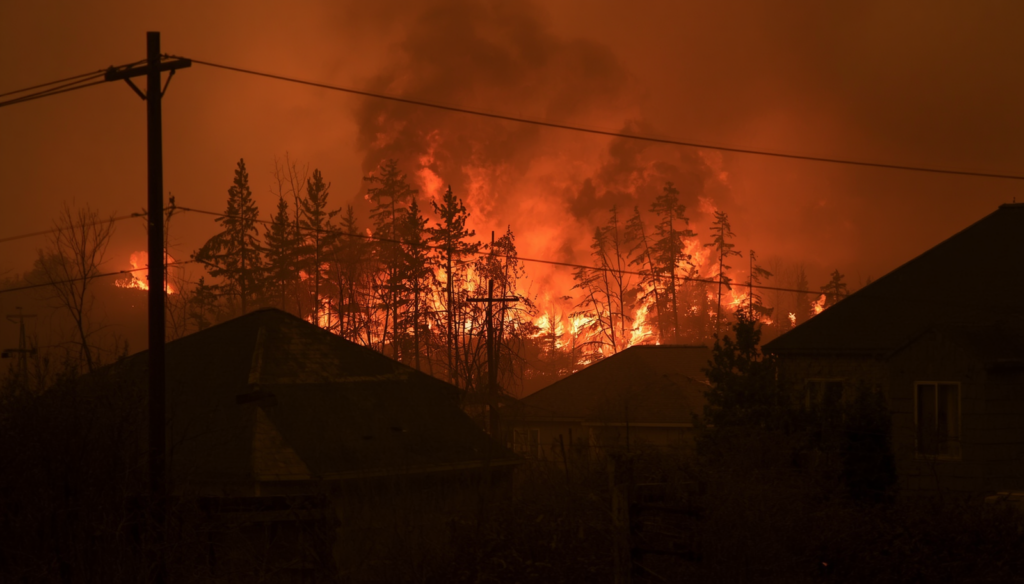
Hey neighbors! Unless you’re living under a rock, you’ve heard about the Sandy Fire that began in Simi Valley on May 18, 2026. Let’s face it: wildfires are becoming increasingly common and destructive across the United States, especially in California. If you live in a high-risk area, protecting your home isn’t just about insurance — it’s about creating defensible space that can withstand intense fire conditions. One of the most effective ways to do this is through strategic hardscaping. Rather watch a video? Click on our YouTube link below!
In this comprehensive guide, we’ll explore the top 5 hardscape elements that wildfire experts recommend for maximum fire protection, and how professional hardscape design can safeguard your property while enhancing its beauty and value.
What Is Defensible Space?
Before diving into specific hardscape elements, let’s define defensible space. This is a term used by firefighters and wildfire prevention experts to describe the area around your home that has been cleared of vegetation and fuel sources. A well-designed defensible space includes three zones:
- Zone 1 (0-5 feet): Immediate perimeter around your home
- Zone 2 (5-30 feet): Intermediate buffer area
- Zone 3 (30-100 feet): Extended zone for vegetation management
Hardscape elements are critical components of all three zones.

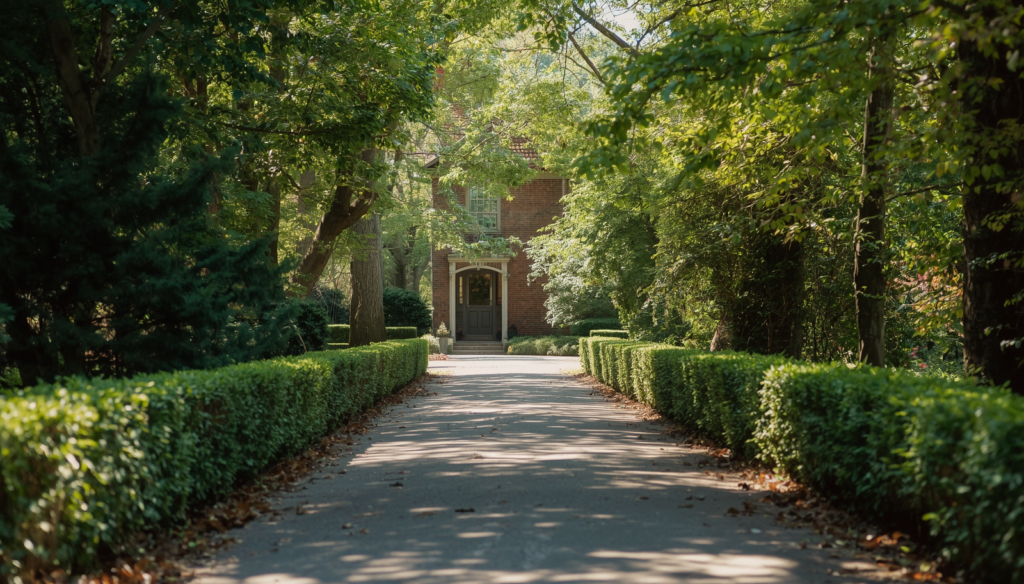
#1: Cleared Driveways — The First Accessible Response
The first hardscape feature to consider for wildfire protection is a clear, accessible driveway. A wide, well-maintained driveway does more than improve curb appeal — it can play a vital role in emergency response. Fire crews need a safe way to reach your home quickly, and a driveway that is at least 12 feet wide with a gravel, asphalt, or concrete surface can help provide that access while also limiting flammable material buildup along the edges.
Be sure to keep vegetation cut back at least 10 feet from both sides, remove low-hanging or dead branches overhead, and maintain clean gravel shoulders. In a wildfire situation, this simple feature could make a major difference in whether firefighters can defend your home.
#2: Retaining Walls — Multi-Functional Fire Defense
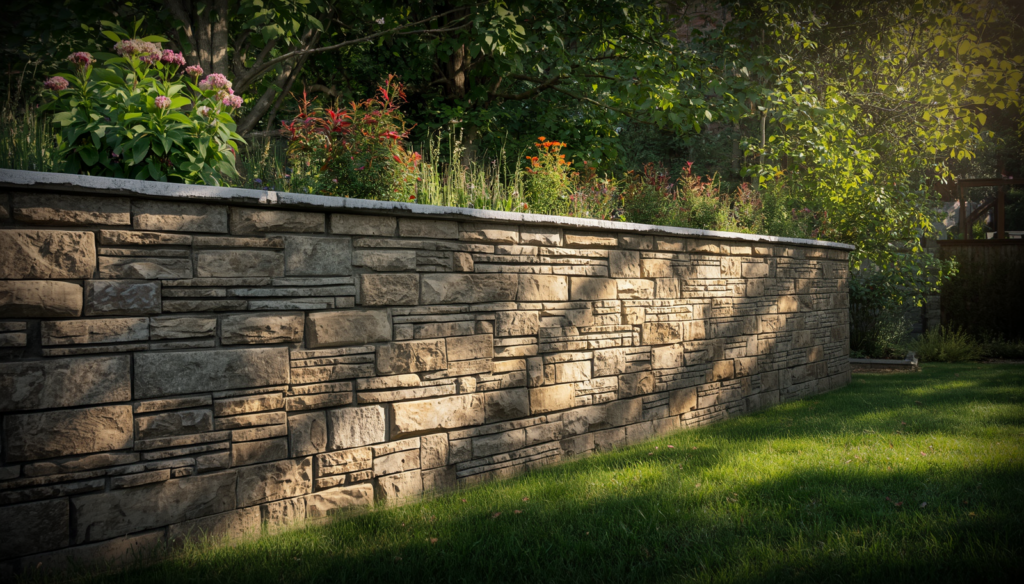
Strategic retaining walls accomplish multiple objectives: they create elevation changes that interrupt vegetation patterns, act as physical fire breaks, slow ember travel, and shield your foundation from direct flame exposure.
Types of Retaining Walls for Wildfire Protection
Stone Retaining Walls
- Natural aesthetic appeal
- Excellent durability
- Premium appearance increases home value
- Blends with landscape design
Concrete Block Retaining Walls
- Cost-effective solution
- Clean, modern look
- Consistent appearance
- Easier installation than stone
Segmental Retaining Walls (SRW)
- Engineered for stability
- Interlocking design
- Available in various colors and textures
- Flexible for curved designs
Timber Retaining Walls (Fire-Resistant Treatment)
- Note: Standard wood is not recommended; only use pressure-treated or fire-resistant materials
- Rustic appearance
- Lower cost than stone
- Requires more maintenance
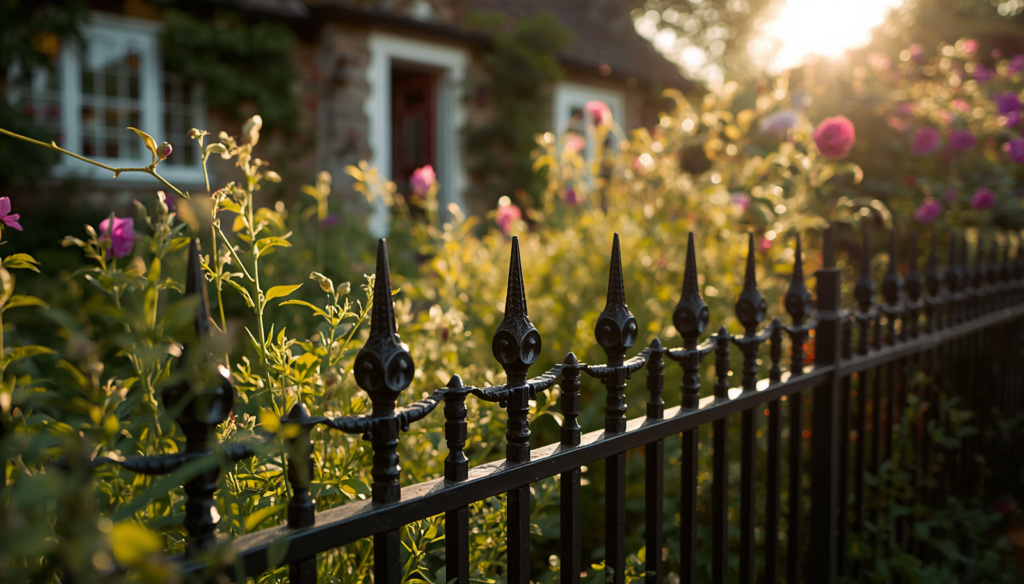
#3: Metal Fencing — Stop Fire Before It Reaches Your Home
Wooden fences are among the first structures to ignite during a wildfire. A single wooden fence can create a continuous fuel source that carries flames directly to your home. Metal and stone fencing eliminate this risk while maintaining property boundaries.
Metal Fencing Options for Fire-Resistant Properties
Aluminum Fencing
- Lightweight and affordable
- Rust-resistant
- Modern appearance
- Requires minimal maintenance
Steel Fencing
- Extremely durable
- High strength for sloped terrain
- Powder-coated options available
- Long lifespan (20-30+ years)
Vinyl Fencing
- Fire-resistant material
- Low maintenance
- Available in multiple colors
- Resists cracking and fading
Implementation Strategy
If you currently have wooden fencing:
- Gradual Replacement: Replace fence sections systematically over time
- Hybrid Approach: Install metal panels in high-risk zones (downhill from home, facing wildland)
- Complete Upgrade: Full fence replacement for maximum protection and cohesive appearance
Additional Benefits of Metal Fencing
- Property Boundary Definition: Clearly marks your property lines
- Improved Curb Appeal: Modern, clean aesthetic
- Increased Home Value: Buyers appreciate fire-resistant features
- Reduced Maintenance: No painting, staining, or wood repairs needed
#4: Hardscape Pathways — Creating Strategic Fire Breaks
Hardscape pathways aren’t just decorative elements — they serve as critical fire breaks that interrupt fuel continuity across your property. By creating zones of non-combustible material, you reduce the likelihood of fire spreading directly toward your home.
Types of Hardscape Pathways for Fire Protection
1. Concrete Pavers
- Durable and long-lasting
- Easy to install and replace individual sections
- Available in various colors and patterns
- Cost-effective for large areas
2. Natural Stone Pathways
- Premium aesthetic appeal
- Excellent traction and drainage
- High durability in all weather conditions
- Complements landscaping design
3. Permeable Pavers
- Allow water drainage (prevents standing water)
- Eco-friendly option
- Reduces runoff and flooding
- Ideal for sloped properties
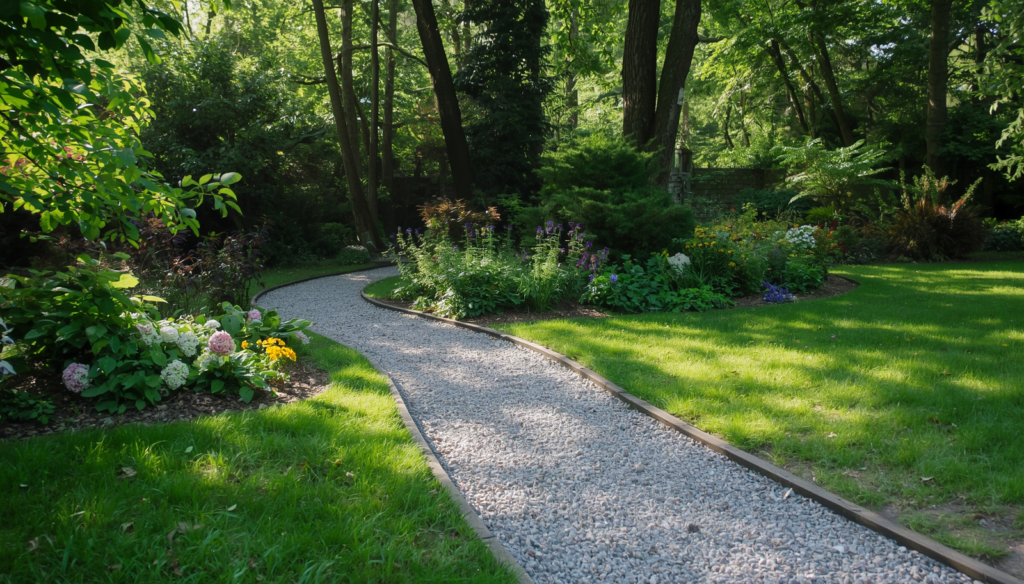
4. Gravel Pathways
- Budget-friendly option
- Easy to maintain and refresh
- Allows good drainage
- Can be combined with edging for definition
Strategic Pathway Placement
To maximize fire protection benefits:
- Create pathways that encircle your home at 10-15 foot intervals
- Use pathways to separate vegetation zones
- Design pathways to guide emergency vehicle access
- Ensure minimum 4-foot width for accessibility

#5: Gravel and Rock Mulch — The Foundation of Fire Defense
Many homeowners don’t realize that wood chips, bark mulch, and pine needles are highly flammable. During wildfire season, these materials act as fuel, increasing the fire risk around your foundation.
The Solution: Inorganic mulch alternatives like crushed rock, pea gravel, river stone, and decorative boulders eliminate this fire hazard entirely.
How to Implement Gravel and Rock Mulch
- Coverage Area: Create a 5-10 foot perimeter of inorganic mulch around your home’s foundation
- Depth: Maintain 3-4 inches of gravel to suppress weeds while maintaining fire protection
- Material Options:
- Crushed granite or basalt
- Pea gravel
- River rock
- Lava rock (adds visual interest)
Additional Benefits
Beyond wildfire protection, rock mulch offers:
- Low Maintenance: No need for replacement like organic mulch
- Water Conservation: Helps retain soil moisture
- Visual Appeal: Modern, clean aesthetic that complements contemporary home designs
- Erosion Control: Stabilizes slopes and prevents soil washout
Protecting your home from wildfire risk doesn’t have to be complicated—and it doesn’t have to break the bank. By investing in thoughtful hardscape design today, you’re creating a protective barrier that will serve your family for years to come. Ready to strengthen your defensible space? Contact us to discuss a wildfire protection plan tailored to your property. Your home’s safety is worth it.